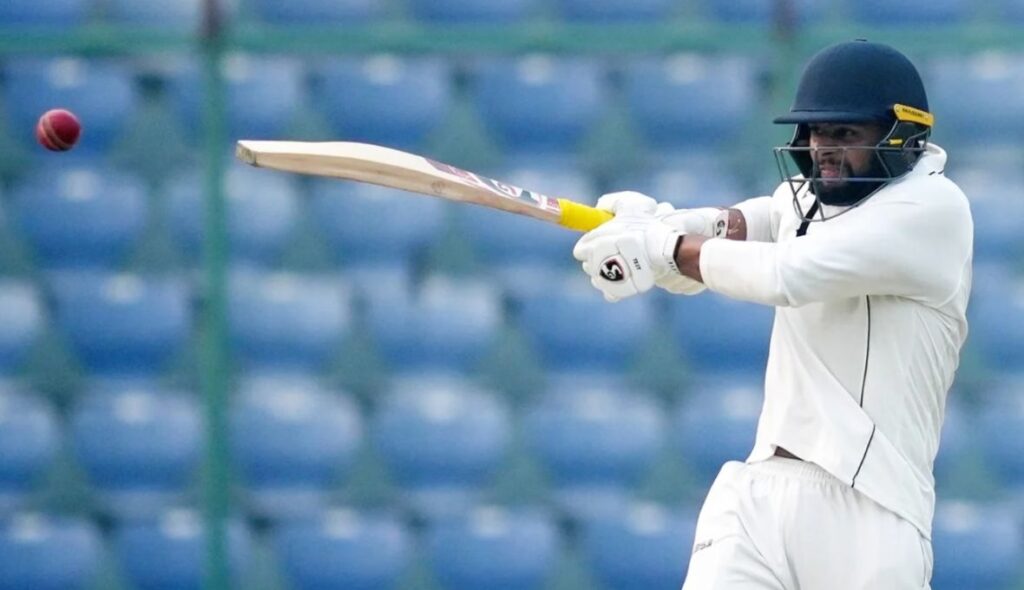

The Ranji Trophy 2025–26 served up a classic domestic cricket storyline when Delhi vs Mumbai—India’s most storied first-class rivalry—opened with a gritty, pressure-soaked day in Mumbai. Delhi were in deep trouble, sliding towards a modest total, before Sanat Sangwan produced a fighting 118 that rescued them from complete embarrassment and helped them reach 221 all out.
But even Sangwan’s resolve couldn’t fully blunt Mumbai’s bowling force. Seamers and spinners hunted in packs, with Mohit Awasthi leading the charge through a decisive five-wicket haul.
As if the rivalry and intensity weren’t enough, the day carried an unusual visual: players were reportedly forced to wear masks for a period due to dust and pollution from construction near the venue, creating a talking point that extended beyond the boundary rope.
Delhi vs Mumbai Ranji Trophy 2025–26: Match Snapshot
- Match: Mumbai vs Delhi, Elite Group (Ranji Trophy 2025–26)
- Venue: Sharad Pawar Cricket Academy BKC, Mumbai
- Delhi 1st Innings: 221 all out (76.4 overs)
- Top scorer: Sanat Sangwan 118 (218 balls, 11 fours, 2 sixes)
- Best Mumbai bowler: Mohit Awasthi 5/62 (16.4 overs)
- Close of Day 1: Mumbai 13/1 (as reported), with play ending slightly early due to poor light
Why This Rivalry Always Feels Bigger Than a Group Match
When Delhi and Mumbai share a Ranji Trophy field, it rarely feels like “just another fixture.” This is the rivalry that has produced decades of India’s domestic legends, intense sessions, and momentum swings that often define entire seasons.
The 2025–26 meeting carried its own context: both teams had something to prove in a competitive group where every first-innings lead, every batting bonus, and every session matters. Even a single day can shape qualification calculations and confidence levels.
And on Day 1, it was Delhi’s young opener Sanat Sangwan who stood tall when the rest of the batting line looked shaky.
Conditions and the “Masks” Moment: A Rare Domestic Talking Point
One of the most striking elements from Day 1 wasn’t a cover drive or a wicket celebration—it was the air quality concern.
Reports indicated dust and pollution from construction activity near the venue caused discomfort, and Mumbai fielders were seen wearing masks for around 30 minutes in the final session. The same report mentioned the AQI at BKC was 156 (listed as “unhealthy”) later in the evening, and that Mumbai’s team management wrote to the association regarding the issue.
In domestic cricket, where players already grind through long days and tough spells, such conditions can add an extra layer of challenge—especially for fast bowlers working hard and fielders sprinting repeatedly.
While the match remained the main story, this was a reminder that modern cricket increasingly intersects with off-field realities too.
Also Read: India Start As Favourites”: Ricky Ponting Delivers Blunt T20 World Cup 2026 Verdict
Delhi’s Batting Story: One Hundred, Many Wickets
Delhi’s innings ended at 221, which tells you the overall picture: they struggled, lost wickets regularly, and needed one major innings to avoid a very low total.
That one major innings came from Sanat Sangwan.
Sanat Sangwan’s 118: A Proper First-Class Rescue Act
Sangwan’s hundred wasn’t about fireworks. It was about survival, discipline, and timing his aggression. According to the scorecard and match reporting, he scored 118 off 218 balls, hitting 11 fours and 2 sixes—numbers that scream “I batted time, I fought, and I held the innings together.”
In a rivalry match, against an attack that kept making breakthroughs, he played the kind of innings that teammates remember for a long time—because it gives bowlers something to defend.
Also notable: this was reported as his third century of the season, suggesting Sangwan isn’t just having a one-off day—he’s building a consistent Ranji campaign.
The Support Acts: Starts That Didn’t Become Partnerships
Delhi did get contributions around Sangwan, but not enough to build a large total. The Cricbuzz scorecard shows Vaibhav Kandpal made 32, while others fell in small clusters, and Delhi’s innings never truly stabilized beyond Sangwan’s presence.
This is usually the difference between 221 and 300+: in first-class cricket, you need at least two batters to go big, or a solid middle-order partnership. Delhi mostly got one.
Mohit Awasthi’s Five-For: The Spell That Tilted the Day Mumbai’s Way
If Sangwan was the reason Delhi reached 221, then Mohit Awasthi was a key reason they didn’t go beyond it.
Awasthi finished Day 1 with 5/62 in 16.4 overs, a spell that underlined Mumbai’s ability to seize control once the innings entered the later phase. In a match like Delhi vs Mumbai, a five-wicket haul is not just statistics—it’s a statement.
The Indian Express match report also highlighted that Awasthi’s five-for anchored Mumbai’s effort while Sangwan’s ton prevented a complete Delhi collapse.
Why This Five-For Matters in Context
- Keeps the total below 250, a psychological win on most wickets.
- Ensures Mumbai has a strong chance to secure a first-innings lead, which can become decisive in Ranji formats.
- Forces Delhi to rely heavily on their bowlers to claw back control.
In Ranji Trophy cricket, the first innings often sets the tone for the whole match. Mumbai’s bowlers ensured that tone favored them.
The Innings Timeline: How Delhi Slipped, Then Stabilized, Then Fell
The live commentary updates suggested Sangwan was already well set by tea, reaching 104 at the break while Delhi were 172/5. That indicates Delhi were still in trouble but had a chance to stretch the total if the lower order held.
However, the fact that they ended on 221 all out confirms that Mumbai cleaned up the tail efficiently, and the last phase of the innings belonged to the bowlers.
This is a familiar Ranji pattern: top-order batter scores a hundred, middle-order offers brief support, and then a sharp bowling unit finishes things quickly once the set batter is removed.
Mumbai’s Reply: Early Movement, Early Wicket, Early Advantage
At stumps, Mumbai were reported at 13/1, with play ending a few minutes early due to poor light.
That single wicket, although small on paper, matters because:
- It puts Delhi on the back foot immediately after being bowled out.
- It signals Mumbai’s plan: bat calmly, build a lead, and let the pitch and pressure do the rest.
Day 2 becomes crucial because if Mumbai’s top order settles and builds a 150–200 run partnership, Delhi may find themselves chasing the game hard.
Key Takeaways From Day 1
1) Sanat Sangwan Looks Like Delhi’s Season Anchor
A hundred in a rivalry game under pressure is a strong indicator of temperament. With reports calling it his third century of the season, Sangwan’s form could be one of Delhi’s biggest positives this year.
2) Delhi’s Middle Order Needs More Weight
Delhi cannot repeatedly rely on one batter to rescue them. Against a team like Mumbai, you need at least two meaningful partnerships to post a commanding total.
3) Mumbai’s Bowling Depth Still Wins Sessions
The combination of regular wickets and a five-for from Awasthi shows Mumbai can still dominate with the ball in traditional Ranji fashion.
4) Conditions Might Become a Storyline
The mask incident due to dust/pollution is unusual and could affect stamina and comfort if the situation continues across days.
What Delhi Need to Do From Here
If Delhi want to stay alive in this match, they need to win one big session early on Day 2. The best case scenario for them is:
- Get Mumbai 3–4 down quickly.
- Keep the first-innings lead within reach.
- Force Mumbai’s middle order to rebuild under pressure.
If Mumbai reach 150/2 or 180/3, Delhi’s bowlers will start feeling the weight of a low first-innings total.
What Mumbai Will Aim For Next
Mumbai’s blueprint is straightforward:
- Bat time.
- Build a lead of 80–120+.
- Put Delhi back under scoreboard pressure in the second innings.
In Ranji cricket, once Mumbai get ahead, they are usually very hard to pull back—because their bowling unit can attack and control the game in long spells.
Why This Match Is Still Open (Despite Delhi Being Bowled Out for 221)
Yes, 221 is not a massive score.
But in first-class cricket, matches can flip quickly if:
- the pitch starts helping bowlers,
- there is early moisture or movement,
- or a team loses 2–3 wickets quickly and panic spreads.
A rivalry match also carries emotional swings. One burst of wickets can bring Delhi right back into it.
Simple FAQs (SEO-Friendly)
What was Delhi’s score in the first innings vs Mumbai?
Delhi were bowled out for 221 in 76.4 overs.
Who scored the century for Delhi?
Sanat Sangwan scored 118.
Who took five wickets for Mumbai?
Mohit Awasthi took 5/62.
Why were players wearing masks during the match?
Reports said dust and pollution from nearby construction led to some players wearing masks for around 30 minutes.
What was Mumbai’s score at stumps on Day 1?
Mumbai were reported at 13/1, with play ending slightly early due to poor light.
Conclusion
Ranji Trophy 2025–26: Delhi vs Mumbai began with a familiar pattern—Mumbai dominating with the ball, Delhi fighting through one brave batter, and the rivalry delivering drama even on a single day.
Sanat Sangwan’s 118 was the innings that saved Delhi from a far worse situation, proving his growing importance to the team’s campaign.
But Mohit Awasthi’s five-for ensured Mumbai still won the day overall, keeping Delhi’s total to 221 and starting their own innings with an early advantage.
With Mumbai at 13/1 at stumps, the match is set up for a crucial Day 2—where Delhi must strike early, and Mumbai will aim to build a commanding first-innings lead.